Genesis AI builds a robot called Eno that has dexterous hands, a wheeled base and no head. Its control model learns partly from data recorded by people who wear sensor gloves while they do their normal jobs. On 17 November the Paris and San Carlos company said it had raised $500 million in a Series A at a $3.5 billion post-money valuation (the company’s value counting the new cash). That is a lot of money for a robot only a few outside customers have tried.
A robot that folds up and learns from gloves
Reuters describes three body segments shaped like oversized playing cards on a rotating wheeled base. It folds up small and pops up to roughly human height to work. Chief executive Zhou Xian told Reuters: “I don’t understand why robots need a head because … it doesn’t even have a brain living there.”
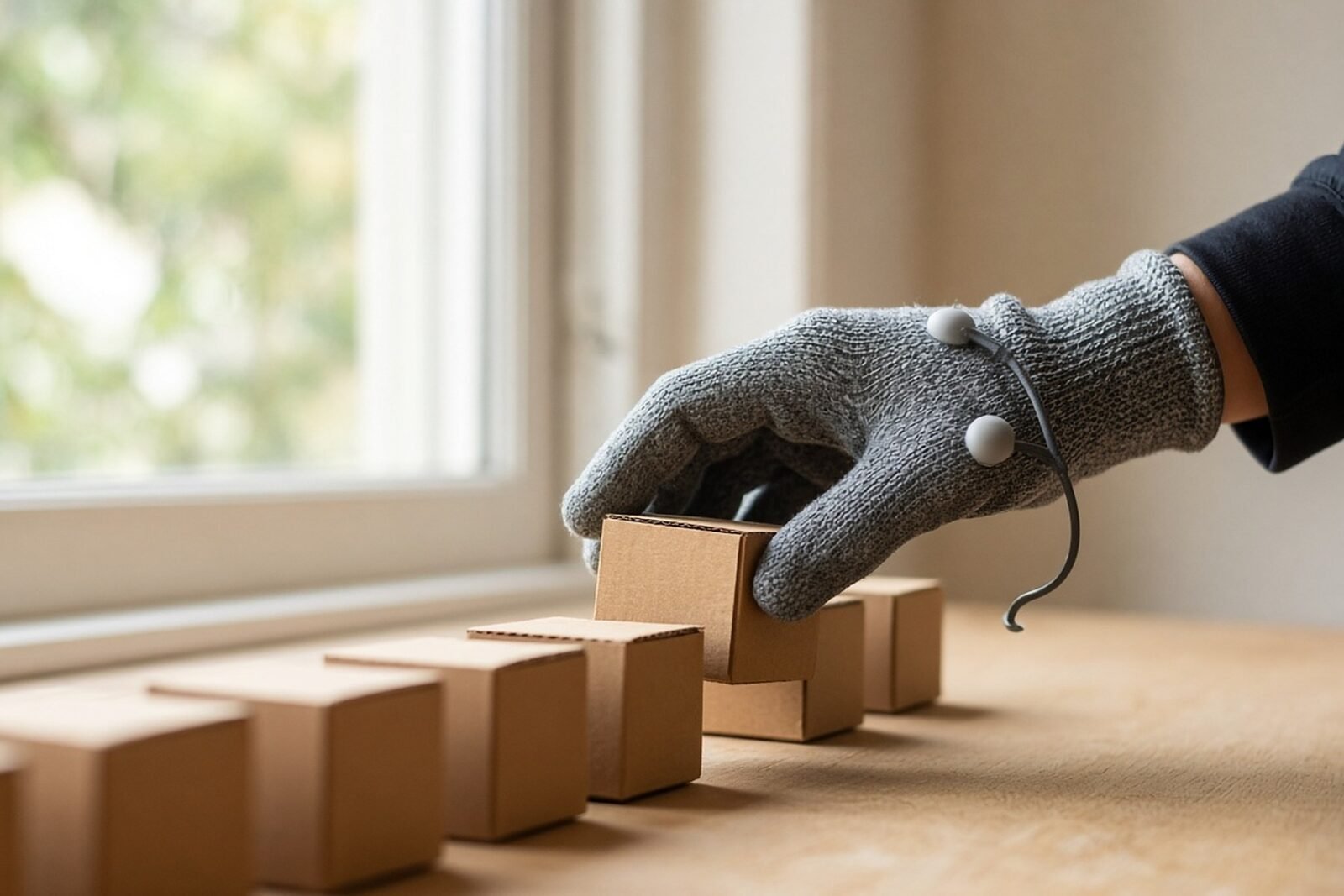
The hands are the point. Genesis says its robot hand, its data glove and a human hand are built to match one to one, so robots can learn from people wearing the glove at work. TechCrunch reports that more than 100 workers around the world wear the gloves and headset cameras, and that their recordings feed the company’s model, called GENE. We covered a similar bet on human data when NVIDIA said GR00T 2 learns robot skills from human video.
TechCrunch’s reporter watched two off-the-shelf robot arms on the model pack two small boxes into a larger one, tape it and stick on a label. On a second run the arms fumbled a box and struggled to peel the label off its strip. Eno itself was not ready to demonstrate.
Who put in the money
Premji Invest, Khosla Ventures and Eclipse co-led the round, according to the company’s announcement. NVIDIA, AMD Ventures, Bpifrance, Samsung Next, Ericsson, Zoom and T. Rowe Price advised accounts joined, as did former Google chief Eric Schmidt and French entrepreneur Xavier Niel.
Several of those names were there at the start. Genesis came out of stealth in July 2025 with a $105 million seed round co-led by Eclipse and Khosla, with Bpifrance, HSG, Schmidt and Niel also in. Back then, TechCrunch reported, it was mainly building a robot model trained on simulated data. Now it designs the whole machine, hands and motors included.
Reuters calls it one of the biggest rounds in European robotics. The company says the cash goes to data collection and training, better hands, customer deployments and hiring.
What is still unproven
The fleet is small. Genesis told TechCrunch it has built 30 to 40 Enos and is piloting them with a handful of customers it would not name. A US contract manufacturer starts work next year; Genesis would not say how many it will make in the year ahead. The Genesis website says targeted customer deployments begin by the end of 2026, and Zhou told Reuters he expects a wider rollout in 2027.
The hands also wear out. TechCrunch reports they last only a few weeks of regular work before they need replacing, and Zhou named hardware and supply chains as the main bottleneck.
In its announcement, Genesis calls GENE the industry’s most advanced robot brain, but the announcement includes no independent test results, and we could not confirm that claim. By contrast, AIRoA-0 was trained on handheld gripper demos and published task success rates. Genesis has not.
What to do this week
If you run a warehouse, lab or packing line and get a pitch for Eno or a rival, ask three plain questions before any pilot: how many weeks the hands last and who pays to swap them, what success rate the robot hits on your own boxes and parts, and what happens when it fumbles. Genesis takes pilot interest through the waitlist on its website.
Sources
- Genesis AI announcement of its $500M Series A, PR Newswire, 17 November 2026
- Genesis AI website, Eno waitlist and deployment timing
- TechCrunch report and demo visit, 17 November 2026
- Reuters report via Yahoo Finance, 17 November 2026
- Genesis AI seed round announcement, PR Newswire, 1 July 2025
- TechCrunch on the $105M seed round, 1 July 2025
Get the weekly email
The week's most useful AI news, a tutorial and an interview.

Martin Scott
Martin Scott is the editor for business and policy at AI Observer, covering startups and deals, regulation, health and science, and AI agency profiles. He follows the money and the legal text, and separates what a rule says from what people claim it says. His style is analytical and plain-spoken.
Spotted a mistake? Tell us on the corrections page.