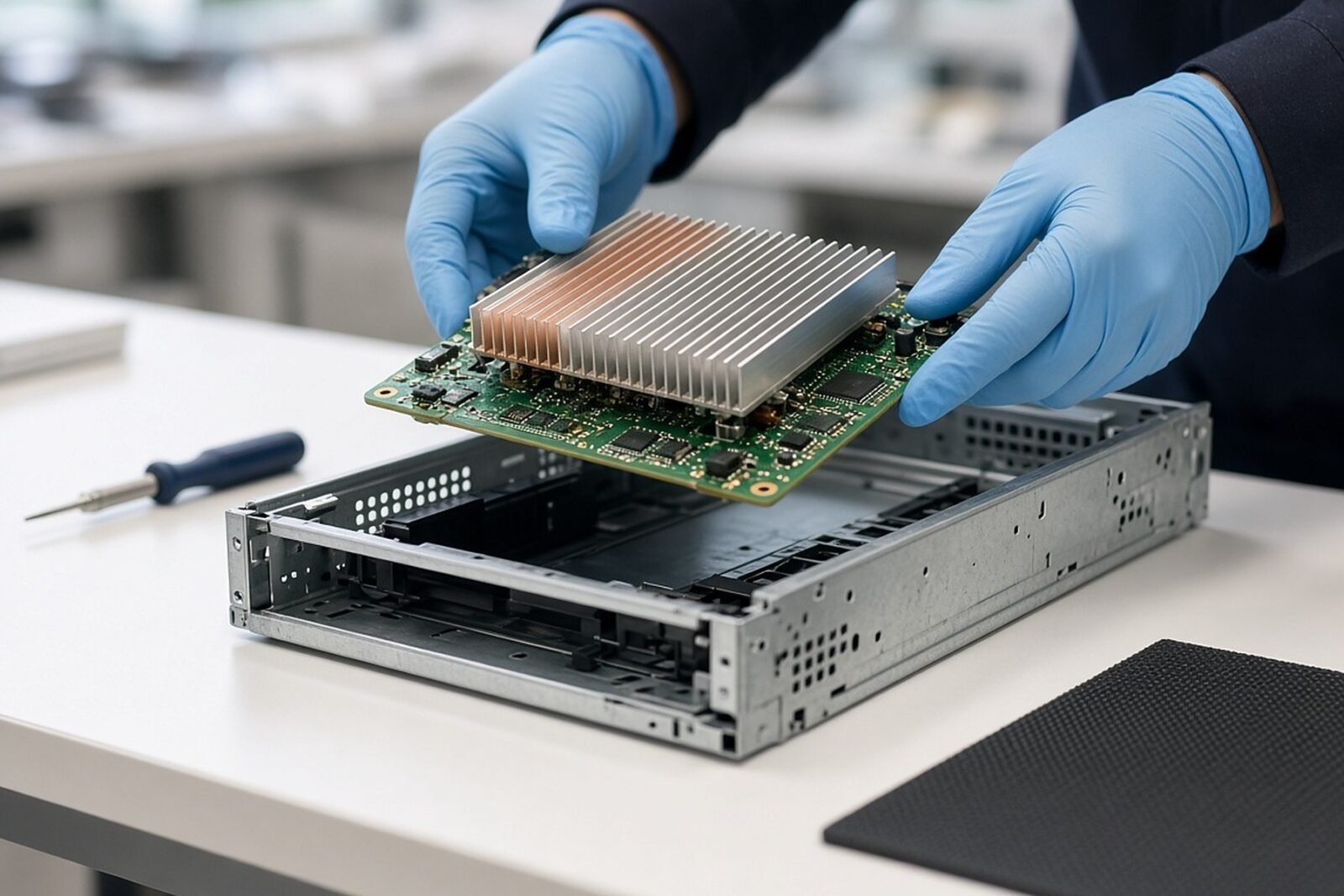
Chinese delivery company Meituan has released LongCat-2.5, a large language model it says scores close to Anthropic’s Claude Opus 5 on coding and agent tests. Every LongCat-2.5 score so far comes from Meituan itself, and the weights are not public. Meituan also says the model was trained entirely on Chinese-made accelerators.
What Meituan released
LongCat-2.5 is a mixture-of-experts model, meaning each token runs through a small set of specialist sub-networks instead of the whole network. The LongCat-2.5 technical blog puts it at 1.6 trillion total parameters (the learned weights) with about 48 billion active per token. That matches the LongCat-2.0 model card; the new part is image input, read as tokens like text.
The model is available on longcat.ai and through an API, according to Meituan’s newsroom post. LongCat-2.0 shipped its weights under the MIT license. As of 2 November, the LongCat page on Hugging Face lists no LongCat-2.5 weights, and the blog does not say whether any are coming.
The chips behind it
Meituan’s post says training ran entirely on domestic compute. Neither source names the chip vendor. The training section of the blog gives one hard constraint: each accelerator has less than 80 GB of memory.
The team kept most traffic inside supernodes, groups of accelerators joined by a fast internal link. Meituan reports that its sharding setup gave 86% higher per-device throughput than a standard data-parallel baseline on long-sequence fine-tuning.
For serving, it stores expert weights and activations as 4-bit numbers, cutting the data each chip moves. Against an 8-bit baseline, it reports 43.3% higher prefill throughput (reading the prompt) and 42.77% higher decode throughput (writing the answer). It says accuracy matched the unquantized model but publishes no numbers for that.
The benchmark claims
Meituan says LongCat-2.5 lands between Claude Opus 4.8 and Claude Opus 5 on many mainstream tests.
In the blog’s evaluation table, it scores 88.4 on Terminal Bench v2.1, a test of agents doing command-line tasks, against 89.1 for Claude Opus 5 and 90.6 for DeepSeek-V4.1-Flash. On the harder Terminal Bench v4.0 it reports 38.5, well behind Opus 5 at 53.9.
LongCat-2.5 tops the table on BrowseComp, a web research test, at 91.9 against 90.8 for Opus 5. Meituan ran it with its own agent software, capped at 1,024 browsing rounds. On DeepSWE v1.1, which tests code fixes across real repositories, it reports 64.6. Only Claude Opus 4.8, at 59.0, scores lower in that row.
What was measured, and by whom
Competitor scores marked with an asterisk come from those companies’ reports or public leaderboards. The rest, Meituan writes, “are self-run and are indicative only”. Several tests are graded by another AI model, and one row, LongCat AppDev Internal, is Meituan’s own benchmark.
Agent software and settings change from row to row, so a one-point gap can reflect setup rather than the model. Last week independent runs scored Mistral Large 4 below Mistral’s own coding numbers on some tests.
We found no independent LongCat-2.5 results, and the Artificial Analysis LongCat page does not list the model yet. We could not confirm any of Meituan’s scores.
What to do this week
If you run coding agents on Claude or GPT models, LongCat-2.5 may be worth a trial through its API. Test it on your own repositories before trusting the table, and score web research and repository fixes separately: Meituan’s own numbers put it near the top on the first and near the bottom on the second. If you need weights you can run yourself, LongCat-2.0 remains available under the MIT license.
Sources
Get the weekly email
The week's most useful AI news, a tutorial and an interview.

Lars Strother
Lars Strother is the senior editor for models and hardware at AI Observer, covering models and research, chips and hardware, and robotics. He came to journalism from engineering and still reads the benchmark tables before the press release. His coverage is measured and skeptical, and he wants to know what was tested, on what, and against which baseline.
Spotted a mistake? Tell us on the corrections page.